pigmentation Treatment Paradise Point
what exactly is pigmentation?
Pigmentation is your skin's natural colour, created by melanin. When melanin is produced or distributed unevenly, areas of the skin can appear darker, lighter or differently coloured. Factors such as UV exposure, hormones, inflammation and ageing can influence how much pigment our skin produces. Treating pigmentation therefore isn't simply about “removing dark spots” - it's about understanding why the pigment has developed and addressing both existing pigment and the triggers that can encourage it to return.
How exactly is melanin formed?
Deep within the skin are specialised cells called melanocytes. These cells produce melanin and are located primarily in the basal layer of the epidermis. The process roughly looks like this:
Trigger → melanocyte stimulation → melanin production → melanin transferred to skin cells → visible pigmentation
Did you know there are different types of melanin?
Melanin is produced by specialised cells called melanocytes and is responsible for much of the colour in our skin, hair and eyes. The two main forms relevant to skin are eumelanin, which produces brown-to-black pigmentation, and pheomelanin, which produces yellow-to-red pigmentation. The balance between these pigments, along with the amount and distribution of melanin, contributes to our individual skin tone and undertones. When melanocytes become stimulated by factors such as UV exposure, hormones or inflammation, they can produce and distribute more melanin, contributing to uneven pigmentation such as sun spots, melasma or post-inflammatory pigmentation.
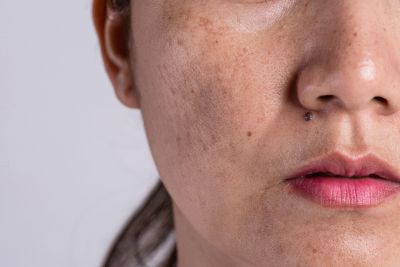
what are the different types of pigmentation?

sun spots (Solar Lentigines)
Post-Inflammatory Hyperpigmentation (PIH)
sun spots (Solar Lentigines)
Flat, brown or darker spots caused by cumulative sun exposure. Commonly appear on the face, hands, chest and other sun-exposed areas.
melasma
Post-Inflammatory Hyperpigmentation (PIH)
sun spots (Solar Lentigines)
Hormone-associated pigmentation that often appears as symmetrical, brown or greyish patches across the cheeks, forehead and upper lip. Sun exposure and visible light can contribute to worsening.
Post-Inflammatory Hyperpigmentation (PIH)
Post-Inflammatory Hyperpigmentation (PIH)
Post-Inflammatory Hyperpigmentation (PIH)
Dark marks that develop after inflammation or injury to the skin, such as acne, eczema, irritation or treatments. More common and often more persistent in deeper skin tones.
Freckles (Ephelides)
Post-inflammatory erythema (PIE)
Post-inflammatory erythema (PIE)
Small, flat, light brown spots influenced by genetics and UV exposure. They may become more noticeable in the sun and fade during periods of reduced sun exposure.
Post-inflammatory erythema (PIE)
Post-inflammatory erythema (PIE)
Post-inflammatory erythema (PIE)
Technically red/pink rather than brown pigmentation. Often seen after acne or inflammation, particularly in lighter skin. It's caused by changes in blood vessels rather than excess melanin
Solar lentiginosis
Post-inflammatory erythema (PIE)
Solar lentiginosis
Often referred to simply as sun damage or age spots. Unlike freckles, they tend to persist year-round and become more numerous with cumulative sun exposure
what treatments at upgrace are best for pigementation?
Elaine Brennan Skin Renewal Peel $1999 (2.5 hours)
Signature Facial with Sircuit Chemical Peels $200 (60 mins)
Elaine Brennan Skin Renewal Peel $1999 (2.5 hours)
The Elaine Brennan Skin Renewal Peel is a great option for clients wanting to improve the appearance of pigmentation, sun damage, melasma and uneven skin tone. Unlike a basic exfoliating facial, this professional peeling treatment is designed to encourage skin renewal by removing layers of dead surface skin cells in a controlled way, with
The Elaine Brennan Skin Renewal Peel is a great option for clients wanting to improve the appearance of pigmentation, sun damage, melasma and uneven skin tone. Unlike a basic exfoliating facial, this professional peeling treatment is designed to encourage skin renewal by removing layers of dead surface skin cells in a controlled way, with a total downtime of 7-8 days for the peeling process. As the skin regenerates, the complexion can appear brighter, smoother and more even.
At Upgrace Skin and Body, we take a personalised, results-driven approach to pigmentation. We assess the type and likely cause of pigmentation before recommending a treatment because different concerns require different approaches.
Dermapen 4 Skin Needling From $280 (75 mins+)
Signature Facial with Sircuit Chemical Peels $200 (60 mins)
Elaine Brennan Skin Renewal Peel $1999 (2.5 hours)
Dermapen 4 at Upgrace Skin and Body is a great treatment for pigmentation, as it supports skin renewal while helping improve uneven skin tone, sun damage and age spots, post-inflammatory hyperpigmentation, melasma and freckles. The treatment uses professional microneedling to create controlled micro-channels in the skin, stimulating the s
Dermapen 4 at Upgrace Skin and Body is a great treatment for pigmentation, as it supports skin renewal while helping improve uneven skin tone, sun damage and age spots, post-inflammatory hyperpigmentation, melasma and freckles. The treatment uses professional microneedling to create controlled micro-channels in the skin, stimulating the skin's natural repair process and collagen production.
Every skin is different, which is why we tailor our treatments to your individual concerns and skin condition. With appropriate home care and consistent sun protection, Dermapen 4 can form part of a personalised approach to achieving a clearer, more even-looking complexion.
Signature Facial with Sircuit Chemical Peels $200 (60 mins)
Signature Facial with Sircuit Chemical Peels $200 (60 mins)
Signature Facial with Sircuit Chemical Peels $200 (60 mins)
Our Sircuit Skin Cosmeceutical Peels are designed to improve the appearance of pigmentation, sun damage, eneven skin tone and dull, congested skin. Using professional exfoliating ingredients selected to suit your skin, these treatments encourage surface cell renewal and help reveal a smoother, brighter and more even-looking complexion. Th
Our Sircuit Skin Cosmeceutical Peels are designed to improve the appearance of pigmentation, sun damage, eneven skin tone and dull, congested skin. Using professional exfoliating ingredients selected to suit your skin, these treatments encourage surface cell renewal and help reveal a smoother, brighter and more even-looking complexion. They can be particularly beneficial for the appearance of superficial sun spots and post-inflammatory pigmentation left behind after breakouts.
At Upgrace Skin and Body, we believe effective skin treatments begin with understanding your skin. Your peel is selected according to your skin's conditions, concerns and treatment goals, with the number of peels and strength progressed gradually as appropriate.